Presentation Template - Blocks: A Strategic Framework for Visual Communication
Effective communication in business and creative fields rarely happens by accident. It is the result of deliberate structure, clear hierarchy, and visual consistency. The Presentation Template - Blocks serves as more than a collection of aesthetic slides; it functions as a modular system designed to organize complex information into digestible, persuasive narratives. For entrepreneurs, marketers, and professionals aged 20 to 50, adopting this architecture is less about saving time on design and more about establishing a reliable framework for decision-making and stakeholder alignment. When utilized strategically, this template transforms the presentation creation process from a chaotic design task into a structured exercise in clarity and positioning.
The Strategic Value of Modular Presentation Architecture
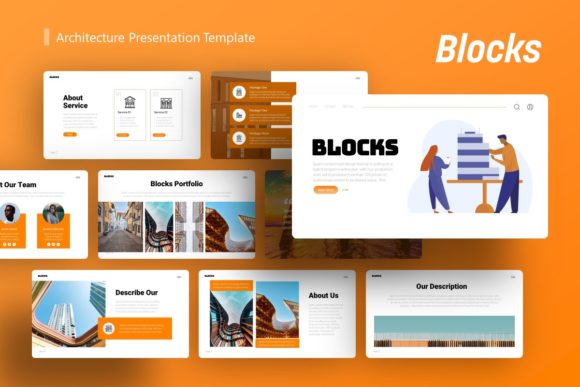
The core advantage of the Presentation Template - Blocks lies in its modularity. In an era where attention spans are fragmented and stakeholders demand rapid comprehension, the ability to reconfigure content without breaking visual coherence is a significant operational asset. This template provides 36 distinct slides per variation, each crafted based on master slide principles. This technical foundation ensures that whether you are building a pitch deck for investors or a portfolio for potential clients, the underlying grid and typography remain consistent. This consistency builds subconscious trust with your audience, signaling professionalism and attention to detail before you even speak.
Beyond aesthetics, the "blocks" concept supports cognitive processing. By compartmentalizing information into resizable, editable graphic elements and handcrafted infographics, you force yourself to distill verbose ideas into essential data points. This constraint is beneficial for planning and strategy. It prevents the common pitfall of overcrowding slides with text, encouraging presenters to focus on high-value insights rather than exhaustive documentation. For creative agencies and corporate teams alike, this architecture acts as a guardrail against scope creep in messaging, ensuring that every slide serves a specific purpose within the broader narrative arc.
Aligning Template Features with Business Objectives
To derive maximum value from Presentation Template - Blocks, users must map specific template features to tangible business goals. The included vector icons and pixel-perfect illustrations are not merely decorative; they are semantic tools that reinforce key messages. When preparing a company profile or startup pitch, consider how these visual assets can replace bullet points to improve retention. Research consistently shows that audiences retain information better when it is paired with relevant visuals. The drag-and-drop picture placeholders further streamline this process, allowing teams to swap generic preview images for authentic brand photography rapidly. This capability is crucial for maintaining brand integrity across different departments or client presentations.
The easy customizable contents feature should be approached as a scalability tool. For freelancers and small business owners, time is a finite resource. Having a pre-validated layout allows you to focus entirely on content strategy and delivery rather than aligning text boxes. However, customization must be intentional. Before altering the master slides, define the primary objective of the presentation. Are you seeking investment, educating a team, or showcasing creative work? If the goal is education, leverage the infographic slides to simplify processes. If the goal is persuasion, utilize the bold typography and image-heavy layouts to evoke emotion. Aligning the template’s flexibility with your specific outcome prevents the presentation from becoming a generic slideshow that fails to resonate.
Practical Applications Across Diverse Professional Contexts
The versatility of Presentation Template - Blocks makes it applicable across a wide spectrum of professional scenarios, provided the user adapts the tone and density of information appropriately.
- Creative Agencies and Portfolios: For visual professionals, the template serves as a gallery framework. The challenge here is often balancing whitespace with content. Use the minimal layouts to let the work breathe, reserving text-heavy blocks for case study breakdowns that explain your strategic thinking alongside the visuals.
- Startup Pitch Decks: Investors review hundreds of decks annually. Standing out requires clarity, not clutter. Utilize the data visualization blocks to present market size, traction, and financial projections clearly. The structured nature of the template helps enforce the standard narrative flow investors expect while allowing enough stylistic distinction to remain memorable.
- Corporate and Internal Reporting: Internal communications often suffer from inconsistency. Adopting this template as a departmental standard ensures that quarterly reviews, project updates, and training materials share a unified look. This reduces cognitive load for employees who consume multiple internal presentations weekly.
- Educators and Trainers: Learning outcomes depend on pacing. The modular slides allow educators to create reusable lesson components. Handcrafted infographics can be repurposed across different modules, creating a cohesive learning experience that aids student memory and engagement.
Mitigating Risks: Avoiding the Generic Trap
While Presentation Template - Blocks offers significant advantages, relying on it without critical thought carries risks. The most prevalent danger is the "template trap," where the presentation looks polished but lacks substance or unique perspective. A beautiful slide cannot compensate for a weak value proposition or unclear strategy. Users must remember that the demo images are for preview purposes only; replacing them with low-quality or irrelevant stock photos will immediately degrade the perceived value of the entire deck. Invest time in sourcing high-quality, context-appropriate imagery or custom photography that genuinely reflects your brand or message.
Another risk is over-customization. Because all graphics are resizable and editable, there is a temptation to alter every element. Excessive modification can break the visual harmony established by the original designers. Unless you have professional design expertise, it is often strategically wiser to work within the existing constraints of the master slides. These layouts were likely tested for readability and balance. Deviating significantly may result in accessibility issues or visual clutter that distracts from your core message. Treat the template as a disciplined container for your ideas, not a coloring book.
Strategic Planning and Implementation Workflow
To use Presentation Template - Blocks intentionally, adopt a workflow that prioritizes content strategy before visual application. Begin by outlining your narrative on paper or a whiteboard. Identify the three to five key takeaways you want your audience to remember. Only after this outline is solidified should you open the PowerPoint .PPTX file. Select slides that directly support those key takeaways. If a slide looks attractive but does not advance your argument, exclude it. The 36-slide count is a menu, not a mandate; using fewer, stronger slides is almost always superior to using all available options.
Leverage the included documentation file to understand the technical capabilities of the master slides fully. Understanding how global changes propagate through the deck can save hours of formatting work and ensure consistency. For teams, establish guidelines on which color palettes and font weights correspond to different types of information. This operational discipline turns the template into a living brand asset rather than a disposable file. Furthermore, regularly audit your presentations against performance metrics. Did the pitch deck lead to meetings? Did the training material improve test scores? Use these feedback loops to refine how you utilize the template over time, ensuring it evolves alongside your strategic needs.
Long-Term Value and Asset Management
Viewing Presentation Template - Blocks as a long-term asset shifts the return on investment calculation. Instead of a one-time purchase for a single meeting, it becomes a foundational component of your organizational knowledge management. Over time, customized versions of the template can serve as archives of best practices, successful pitches, and standardized reporting formats. This accumulation of institutional memory accelerates onboarding for new hires and maintains continuity during staff transitions.
For individual professionals and freelancers, mastering this specific architecture builds a recognizable personal brand. Clients begin to associate your clean, structured visual style with your professional competence. The efficiency gained from not reinventing the wheel for every project compounds, freeing up mental energy for higher-level consulting and creative problem-solving. Ultimately, the strategic utility of Presentation Template - Blocks is defined not by the number of slides or the quality of the vectors, but by the intentionality of the user. When deployed with clear goals, contextual awareness, and disciplined execution, it becomes an indispensable tool for translating complex strategies into compelling, actionable narratives that drive real-world results.