Presentation Template - Neurology: A Strategic Asset for Professional Communication
The Presentation Template - Neurology serves as more than a simple collection of slides; it functions as a structured framework for communicating complex information with clarity and authority. While the naming convention suggests a niche medical focus, the underlying architecture of this template offers strategic value across a spectrum of professional disciplines. For entrepreneurs, marketers, educators, and corporate decision-makers, the utility lies in its rigorous organization and visual hierarchy. Utilizing this resource effectively requires shifting perspective from viewing it as a decorative overlay to treating it as a cognitive tool that guides audience attention and reinforces key messages.
In an era where attention spans are fragmented and stakeholders demand concise insights, the structure provided by the Presentation Template - Neurology supports better decision-making. It forces presenters to distill vast amounts of data into digestible narratives. Whether you are pitching a startup, presenting a company profile, or showcasing a personal portfolio, the template’s design principles—rooted in precision and logical flow—help bridge the gap between raw information and actionable understanding. The goal is not merely to display content, but to facilitate comprehension and drive specific outcomes.
Leveraging Visual Structure for Strategic Clarity
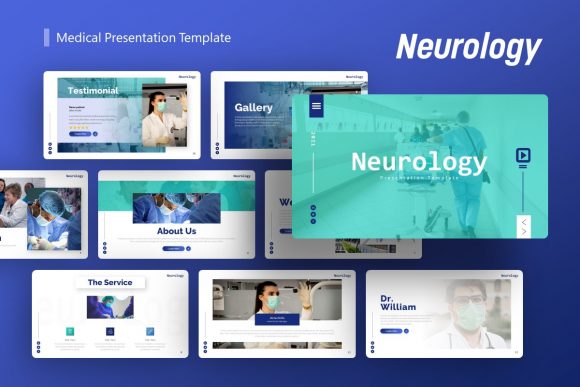
The primary advantage of adopting a specialized template like Presentation Template - Neurology is the imposition of order upon chaos. With 36 distinct slides included in each variation, users are presented with a comprehensive library of layouts designed for specific communicative functions. This abundance is strategic rather than excessive. It allows professionals to select formats that match their narrative needs rather than forcing content into ill-fitting generic slides.
For creative agencies and corporate teams, this variety supports diverse storytelling modes. You might utilize diagram-heavy slides for operational overviews, minimalist image placeholders for portfolio work, or data-centric infographics for quarterly reviews. The handcrafted infographics based on master slides ensure consistency without sacrificing flexibility. Because these elements are pixel-perfect and fully resizable, they maintain professional integrity regardless of screen size or projection format. This technical reliability removes friction during high-stakes presentations, allowing the presenter to focus entirely on delivery and engagement.
Strategic communication relies on reducing cognitive load for the audience. The clean aesthetics and logical grouping found in this template mirror best practices in information design. When applied to non-medical contexts such as business pitches or educational lectures, this "clinical" precision translates to trustworthiness and competence. Audiences subconsciously associate organized, precise visuals with organized, precise thinking. Therefore, using Presentation Template - Neurology can subtly enhance your positioning as a thorough and reliable expert, regardless of your actual industry vertical.
Operational Efficiency and Brand Consistency
Beyond aesthetics, this template addresses critical operational concerns: speed and standardization. For freelancers, small business owners, and marketing teams operating under tight deadlines, the easy customizable contents act as a force multiplier. The drag-and-drop picture placeholders and editable vector icons eliminate hours of formatting labor. This efficiency allows professionals to allocate more time to refining their message and rehearsing their delivery, which ultimately yields better results than spending that same time aligning text boxes manually.
Consistency is another pillar of long-term brand equity. The master slide architecture ensures that typography, color palettes, and spacing remain uniform throughout the deck. For organizations producing frequent internal updates or external pitch decks, this built-in governance prevents brand drift. Even when multiple team members contribute to a single presentation, the Presentation Template - Neurology enforces a cohesive visual language. This is particularly valuable for startups scaling their operations or agencies managing multiple client accounts simultaneously. Standardization reduces review cycles and ensures that every output meets a baseline quality threshold.
Furthermore, the inclusion of documentation files and vector icon sets extends the asset's lifecycle. These resources serve as a reference point for future projects, creating a reusable system rather than a disposable file. By integrating this template into your broader workflow, you establish a foundation for scalable content production. This approach transforms a one-time purchase into a long-term productivity asset that compounds in value over time.
Intentional Application Across Diverse Use Cases
To maximize the return on investment from Presentation Template - Neurology, users must apply it intentionally to their specific context. Randomly inserting content into attractive slides rarely produces strategic alignment. Instead, consider how the template’s features map to your immediate goals.
- Creative Agencies and Portfolios: Leverage the high-quality image placeholders and grid-based layouts to create visual rhythm. Use the cleaner, whitespace-heavy slides to let creative work breathe, avoiding clutter that distracts from the portfolio pieces themselves.
- Startups and Pitch Decks: Utilize the infographic slides to visualize market opportunity, traction, and business models. Investors process visual data faster than text; use the template’s charting tools to make metrics immediately comprehensible. Select slides that emphasize problem-solution dynamics to strengthen your narrative arc.
- Corporate and Business Profiles: Focus on the timeline, team introduction, and process diagrams. These slides communicate stability and organizational maturity. Use the master slide variations to differentiate between departments or service lines while maintaining overall corporate identity.
- Educators and Trainers: Employ the step-by-step and comparison layouts to break down complex concepts. The neurological origin of the design implies a respect for learning processes; adapt this by pacing information density appropriately to prevent student fatigue.
In each scenario, the template acts as a scaffold. Your expertise provides the substance, while the Presentation Template - Neurology provides the vessel. Recognizing this distinction prevents style from overshadowing strategy. The most effective presentations use design to amplify meaning, not obscure a lack thereof.
Mitigating Risks and Avoiding Common Pitfalls
Despite its versatility, relying on Presentation Template - Neurology without clear objectives carries inherent risks. The most significant danger is the "template trap," where the available slides dictate the narrative rather than the other way around. Having 36 slides does not mean you should use 36 slides. Overstuffing a presentation simply because attractive layouts exist dilutes impact and exhausts audiences. Strategic restraint is essential; curate only the slides that actively advance your argument.
Another risk involves contextual dissonance. While the template is adaptable, some imagery or iconography may retain residual medical connotations. Users must critically evaluate every visual element to ensure it aligns with their specific industry. A brain icon might be perfect for a psychology workshop but confusing for a fintech pitch. Thoroughly audit the vector icons and illustrations before finalizing your deck. Customization is not optional; it is a mandatory step in making the asset truly yours.
Additionally, users must remember that demo images are for preview purposes only and are not included in the downloadable files. Failing to plan for original photography or licensed assets can lead to last-minute scrambling. Treat the placeholder areas as prompts for your own visual content strategy. Prepare high-resolution, relevant imagery in advance to maintain the pixel-perfect standard set by the template itself. Relying on low-quality stock photos will undermine the premium feel of the design and weaken your professional credibility.
Making Informed Decisions for Long-Term Value
Adopting Presentation Template - Neurology should be part of a broader evaluation of your communication infrastructure. Before downloading, assess whether your current challenges are structural or substantive. If your messaging is unclear, no amount of polished design will fix it. However, if your ideas are solid but your delivery lacks polish or consistency, this template offers a high-leverage solution.
Consider the long-term implications of your choice. Will this template grow with your organization? Does it offer enough variation to support different types of communications over the next year? The combination of PowerPoint compatibility, editable vectors, and master slide functionality suggests strong longevity. Unlike trend-driven designs that age quickly, the functional aesthetic of this template tends to remain relevant longer, protecting your investment.
Ultimately, the value of Presentation Template - Neurology is determined by the intentionality of its user. It is a tool for professionals who understand that form and function are inseparable in effective communication. By approaching it strategically—customizing deeply, curating ruthlessly, and aligning visually with your core objectives—you transform a standard file into a powerful engine for persuasion, education, and business growth. The template provides the potential; your strategic application realizes the outcome.