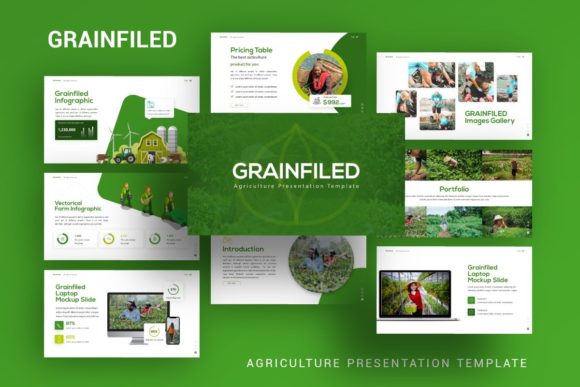
Evaluating Presentation Template - Grainfiled for Professional Use
Selecting the right visual framework is a critical step in preparing for business meetings, pitch decks, or portfolio reviews. The Presentation Template - Grainfiled offers a specialized design system tailored primarily for agricultural contexts, yet structured with enough flexibility to serve creative agencies, corporate profiles, and startups. When evaluating this template, it is necessary to look beyond the aesthetic appeal and assess its functional utility, technical specifications, and alignment with specific project goals. This analysis explores the practical considerations for adopting the Introducing Grainfiled Agriculture Presentation as a foundational tool for professional communication.
Defining the Scope and Utility of Grainfiled
The Presentation Template - Grainfield is fundamentally a PowerPoint-based asset designed to streamline the creation of visually consistent slide decks. While its primary branding suggests a niche focus on agriculture, the underlying architecture supports a broader range of applications. The template includes 35 unique slides per variation, providing a substantial library of layouts without overwhelming the user with unnecessary options. This volume strikes a balance between variety and manageability, allowing presenters to construct comprehensive narratives without significant repetition.
Beyond standard text-and-image layouts, the template distinguishes itself through handcrafted infographics based on Master Slides. This technical detail is significant for evaluators because it implies that graphical elements are not merely static images but editable vector objects within PowerPoint. Users can modify data visualization directly in the software without requiring external graphic design tools like Adobe Illustrator. For organizations lacking dedicated design resources, this feature reduces friction in updating statistics, timelines, and process diagrams.
Key Benefits for Decision Makers
When comparing presentation assets, efficiency and customization capabilities often drive the final selection. The Grainfiled template addresses several common pain points in deck creation:
- Master Slide Architecture: By anchoring infographics and layout elements to Master Slides, global changes can be applied across multiple slides instantly. This ensures brand consistency and significantly reduces formatting time during revisions.
- Vector-Based Scalability: All graphics are resizable and editable vectors. This ensures that presentations maintain pixel-perfect quality regardless of screen size or projection format, eliminating the blurriness associated with rasterized templates.
- Drag-and-Drop Functionality: Picture placeholders are configured for intuitive use. Evaluators should note that this lowers the technical barrier for team members who may not be proficient in PowerPoint, facilitating collaborative deck building.
- Comprehensive Asset Inclusion: The package includes the .PPTX file, documentation, and vector icons. Having integrated iconography prevents the need to source mismatched third-party assets, maintaining visual cohesion throughout the presentation.
These features collectively suggest that the template is optimized for users who require professional output with minimal design overhead. It serves as a middle ground between generic free templates and expensive custom agency work.
Tradeoffs and Practical Considerations
No template is universally perfect, and objective evaluation requires acknowledging limitations. Prospective users must weigh specific tradeoffs before integrating the Presentation Template - Grainfiled into their workflow.
Agricultural Aesthetic vs. General Application: While marketed for diverse uses such as photography portfolios or startup pitch decks, the core visual language is rooted in agriculture. Color palettes, background textures, and illustrative styles likely reflect organic or rural themes. Organizations in tech, finance, or industrial sectors may find the default styling misaligned with their brand identity. Customizing these elements to fit a non-agricultural context is possible due to the editable nature of the files, but it requires additional effort compared to selecting an industry-neutral template.
Image Licensing Exclusions: A critical operational consideration is that all images shown in the demo are for preview purposes only and are not included in the downloadable files. Budgets and timelines must account for sourcing high-quality, licensed stock photography or original assets. Relying solely on the template’s layout without planning for image acquisition can lead to project delays or legal risks regarding copyright.
PowerPoint Dependency: Despite the versatility of modern presentation software, this template is strictly a .PPTX file. Teams standardized exclusively on Keynote, Google Slides, or web-based platforms may encounter compatibility issues. While conversion is often possible, complex master slides and vector infographics sometimes degrade during cross-platform migration. Evaluators should verify their organization's software ecosystem before purchase.
Situational Fit: When to Choose Grainfiled
The decision to adopt this template should be driven by specific use cases where its strengths provide tangible value. The Presentation Template - Grainfiled is likely a strong fit in the following scenarios:
- AgriTech and Farming Enterprises: For businesses directly involved in agriculture, food production, or sustainability, the thematic alignment saves significant branding time. The pre-designed metaphors and imagery resonate immediately with target audiences.
- Rural Development and NGOs: Organizations focusing on rural infrastructure, environmental conservation, or community development will find the tone and structure appropriate for stakeholder reporting and grant proposals.
- Resource-Constrained Teams: Small agencies or startups that need a polished, infographic-heavy deck but cannot afford custom design services benefit from the handcrafted, editable vectors. The 35-slide count provides enough depth for investor pitches without excess bloat.
- Portfolio Presentations: Photographers specializing in nature, landscape, or documentary work may find the clean, organic layouts complementary to their visual content.
When to Consider Alternatives
Conversely, there are distinct situations where alternative solutions may offer better ROI or alignment:
- Highly Technical Corporate Reporting: If the presentation requires dense financial tables, complex Gantt charts, or strict adherence to a non-organic corporate style guide, a business-specific template with neutral aesthetics may reduce rework time.
- Web-Native Workflows: Teams that collaborate asynchronously via cloud-native tools should prioritize templates built natively for those ecosystems to preserve animation fidelity and editing ease.
- Minimalist Design Preferences: Users seeking ultra-minimalist or brutalist design trends may find the illustrative, handcrafted style of Grainfiled too ornate. Stripping back these elements to achieve minimalism negates the value proposition of purchasing a feature-rich template.
Making the Final Selection
Evaluating the Presentation Template - Grainfiled ultimately comes down to balancing aesthetic preference with technical necessity. The inclusion of 35 editable slides, master-slide-based infographics, and vector assets positions it as a robust tool for users willing to invest time in customization. Its strength lies in bridging the gap between niche agricultural storytelling and general business functionality.
However, successful implementation depends on realistic expectations regarding image sourcing and stylistic adaptation. Decision-makers should review the documentation file and test the .PPTX compatibility within their specific environment before committing. By treating the template as a flexible structural foundation rather than a finished product, organizations can leverage its features to create compelling, professional presentations that effectively communicate their message while maintaining operational efficiency.