Elevating Visual Storytelling: A Comprehensive Guide to the Festifood Culinary Presentation Template
In the modern digital landscape, the ability to communicate ideas visually is just as important as the content itself. Whether you are pitching a new restaurant concept, showcasing a photography portfolio, or presenting a quarterly business review, the design of your presentation serves as the foundation for audience engagement. This is where specialized tools like the Festifood Culinary Presentation Template become essential assets. While the name suggests a niche focus on food and hospitality, this template has evolved into a versatile resource for creative agencies, startups, corporate profiles, and personal portfolios alike.
Understanding how to leverage a high-quality presentation template is about more than just aesthetics; it is about efficiency, consistency, and professional storytelling. This guide explores the purpose, features, and practical applications of the Festifood template, helping both beginners and experienced presenters understand why structured design systems are critical for success in today’s visual economy.
The Role of Specialized Templates in Modern Communication
To understand the significance of the Festifood template, one must first understand the shift in presentation design. Gone are the days when a simple bullet-point list sufficed for professional communication. Today, audiences expect immersive visual experiences that complement the spoken narrative. A template acts as a pre-designed framework that ensures visual harmony without requiring the user to be a professional graphic designer.
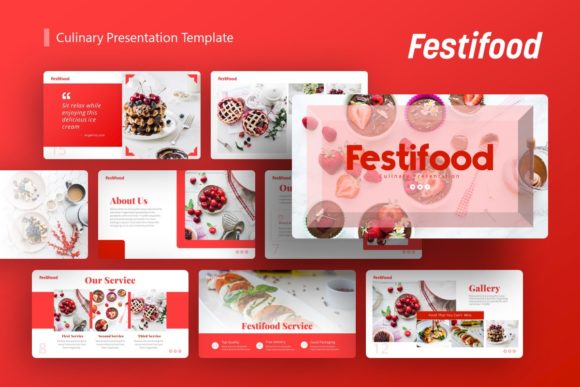
The Festifood template bridges the gap between niche culinary aesthetics and broad business utility. At its core, it provides a cohesive visual language. For a chef, this means displaying menu items with appetizing layouts. For a tech startup, those same layouts can be repurposed to display product features or team bios. The underlying principle is visual hierarchy—guiding the viewer’s eye through information in a logical, engaging manner. By using a template based on master slides, users ensure that fonts, colors, and spacing remain consistent across all 36 slides, which builds trust and professionalism.
Versatility Beyond the Kitchen
A common misunderstanding regarding themed templates is that they are too rigid for general use. However, the Festifood template demonstrates exceptional adaptability. Its design philosophy relies on clean lines, ample whitespace, and modular grids rather than overly specific decorative elements. This makes it suitable for a wide array of purposes:
- Creative Agencies and Portfolios: The image-heavy layouts allow designers and photographers to showcase work without distraction.
- Corporate and Business Profiles: Clean infographic slides transform complex data into digestible visual summaries.
- Startups and Pitch Decks: Structured flows help entrepreneurs narrate their problem-solution story effectively.
- Personal Branding: Individuals can use the template to create resumes, media kits, or project showcases.
This versatility stems from the fact that good design is universal. The principles used to make food look appealing—color balance, composition, and focal points—are the exact same principles used to make business data look compelling.
Deconstructing Key Features: Why Technical Specs Matter
When evaluating a presentation asset, it is crucial to look beyond the preview images and understand the technical architecture. The Festifood template includes specific features designed to streamline the workflow for users of varying skill levels.
Master Slides and Global Editing
The most significant feature for efficiency is the use of Master Slides. In PowerPoint (.PPTX) architecture, master slides act as the blueprint for the entire deck. Instead of formatting thirty individual slides one by one, a user can change a font, color scheme, or logo placement on the master slide, and that change will propagate instantly across the entire presentation. This is vital for maintaining brand consistency and saving time during revisions.
Handcrafted Infographics and Vector Assets
Data visualization is often the weakest point in amateur presentations. The Festifood template addresses this by including handcrafted infographics. Unlike generic charts pulled from Excel, these are custom-designed vector illustrations. Because they are vector-based, they are fully resizable and editable without losing quality. Users can change colors to match their brand identity or adjust shapes to fit specific data sets. This level of customization ensures that the visual aids support the narrative rather than looking like stock clip art.
Drag-and-Drop Picture Placeholders
For beginners, aligning images perfectly can be frustrating. This template utilizes smart picture placeholders. Users simply drag their own image into the designated frame, and the software automatically crops and masks it to fit the design. This "pixel-perfect" approach eliminates the guesswork of manual resizing and ensures that every slide maintains the intended professional polish.
Practical Applications in Professional Settings
Understanding the features is only half the battle; knowing how to apply them in real-world scenarios is where value is realized. Let us explore how different professionals might utilize this 36-slide ecosystem.
The Restaurant Owner: For a restaurateur seeking investors, the template serves as a pitch deck. The introductory slides establish the brand atmosphere, while the infographic slides break down market analysis and projected revenue. The image placeholders highlight signature dishes, creating an emotional connection with potential stakeholders before the financials are even discussed.
The Marketing Agency: An agency might use the template for a client proposal. The "Creative Agency" layout allows them to present case studies visually. By utilizing the editable vector icons, they can customize the iconography to reflect the client’s industry, making the proposal feel bespoke rather than templated.
The Educator or Trainer: In educational settings, retaining attention is key. The variety of slide layouts prevents visual fatigue. An instructor can alternate between text-heavy explanation slides, visual diagram slides, and quote highlights to maintain a dynamic rhythm throughout a lecture.
Navigating Files and Licensing: Best Practices
When downloading and using digital assets like Festifood, users must be aware of what is actually included to avoid confusion. The package typically contains the PowerPoint .PPTX file, a documentation file, and a set of vector icons. It is imperative to read the documentation, as it often contains shortcuts, font links, and troubleshooting tips specific to the template.
A Critical Note on Imagery: One of the most frequent points of confusion for new users involves the preview images. As stated in the product details, all images shown in the demo are for preview purposes only and are not included in the downloadable files. This is standard practice in the design industry due to licensing restrictions. Users should plan to source their own high-quality photography or utilize royalty-free stock image sites. Understanding this distinction upfront prevents disappointment and encourages users to curate original visuals that truly represent their unique message.
Building Broader Design Literacy
Using a template like Festifood is also an educational exercise. By analyzing how the template is constructed, users inadvertently learn fundamental design principles. They observe how negative space creates focus, how color contrast improves readability, and how typography establishes tone. Over time, this exposure helps non-designers develop a "design eye," enabling them to make better aesthetic decisions even outside of the template environment.
Furthermore, working with editable vectors and master slides demystifies graphic design software. It transforms the user from a passive consumer of design into an active creator. This empowerment is particularly relevant in the gig economy and entrepreneurial world, where the ability to produce professional-grade collateral independently is a valuable competitive advantage.
Conclusion: Investing in Visual Excellence
The Festifood Culinary Presentation Template represents more than just a collection of pretty slides; it is a comprehensive toolkit for effective communication. By combining 36 versatile layouts, robust technical features like master slides and vector graphics, and a design aesthetic that transcends its culinary namesake, it offers immense value to a diverse audience.
Whether you are building a startup pitch deck, refining a corporate profile, or curating a personal portfolio, the right template serves as a catalyst for clarity and impact. It allows you to focus on what matters most—your content and your story—while ensuring that the vehicle delivering that message is polished, professional, and persuasive. In a world saturated with information, investing in high-quality presentation architecture is not merely a stylistic choice; it is a strategic necessity for anyone looking to be heard, understood, and remembered.